
Agents, assistants and us - Who’s actually doing the work?
My talk at Macmillan's Global Teachers' Festival.

Intro
When I was asked last year to predict what the next big thing is going to be in ELT with regard to AI, I was first at a complete loss. But then I glanced through my Linkedin feed, and could quickly see that it’s probably going to have something to do with AI agents.
Although most of the posts and experiments I’ve seen so far come from the worlds of higher education, instructional design, and business, I still believe that it’s going to have an impact on the world of “regular” teaching as well. Because at the end of the day, what all these new technological inventions do is make traditional learning tasks easier to complete.
Cheating vs. Learning with AI
That’s why I decided to take a closer look at what we can do as teachers to create a more authentic and realistic learning environment to make cheating with AI a less appealing option.
Learning with AI, on the other hand, is something we shouldn’t punish as long as it follows the main principles of AI literacy (or AI fluency, as Anthropic called it in their latest report):
critical approach to the generated results
checking the sources that were used to generate the results
asking follow-up questions to make sure everything is clear
being able to formulate and/or refine what you want
What’s an agent and why does it matter to us?
First of all, we need to clarify some confusing terminology.
There are many places where you might see the word “agent” but it describes something else. I’ll use David PBL Ross’s definition now:
“Agentic AI refers to an AI system that can independently make decisions and take actions to achieve specific goals. Agentic AI can act with autonomy, plan and adapt, learn from experience, and handle complexity.”
(Ross, 2025)
This means that you can give an AI agent or an agentic browser, like Perplexity Comet or ChatGPT Atlas, a task, e.g. to buy a plane ticket or to redesign your already existing course, and they will take action and complete the whole thing independently and autonomously, while stopping and asking for your input whenever it’s needed (for example, when they need to log in somewhere).
I loved Anna Mills’s webinar about how agentic browsers can easily complete online quizzes and activities in Learning Management Systems. What this essentially means is that online course completions and certificates will lose their relevance. And this in turn would actually disadvantage those who can’t access in-person education. At the moment, there are no real solutions to this problem yet (or there could be but it’s not really in the companies’ interest). I highly recommend her webinar and her slides:

Other uses of AI chatbots: assistants, shared chats, and custom bots
Now, let’s take a quick look at other uses of AI chatbots that might be sometimes confused with agentic behavior.
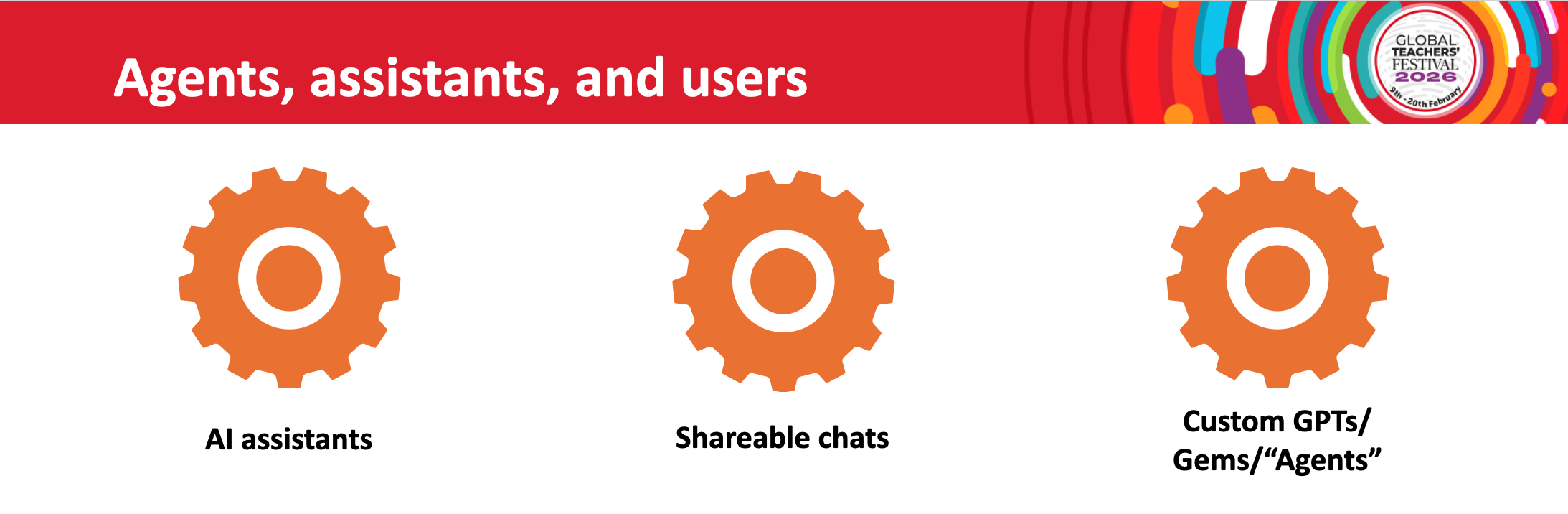
AI assistants: You start with a prompt that defines the core task. Every new message builds on the original prompt. E.g., feedback writing assistant, report writing assistant, or parent email assistant. These are basically what you can find in MagicSchool.
Shareable chats: I’ve recently started experimenting with these since you can now interact with chats that were shared with you. In this case, you create a step-by-step dialog-style activity, which you then share with your students who can have their own individual chat sessions. E.g., argumentative essay developer, text-based role plays, business plan idea generator.
Custom GPTs: These are the closest to agentic behavior, and that’s why Copilot calls these “Agents” but they can only become agents if they start making decisions independently. GPTs (Gemini calls them “Gems”) are custom-made bots with a clearly defined function and pre-uploaded knowledge. E.g., school FAQ bot.
The main question: Why do students want to use AI to solve tasks?
OK, there are all these new AI chatbots and agents out there that can easily do the work for students. But the real question is this: Why do they want this?
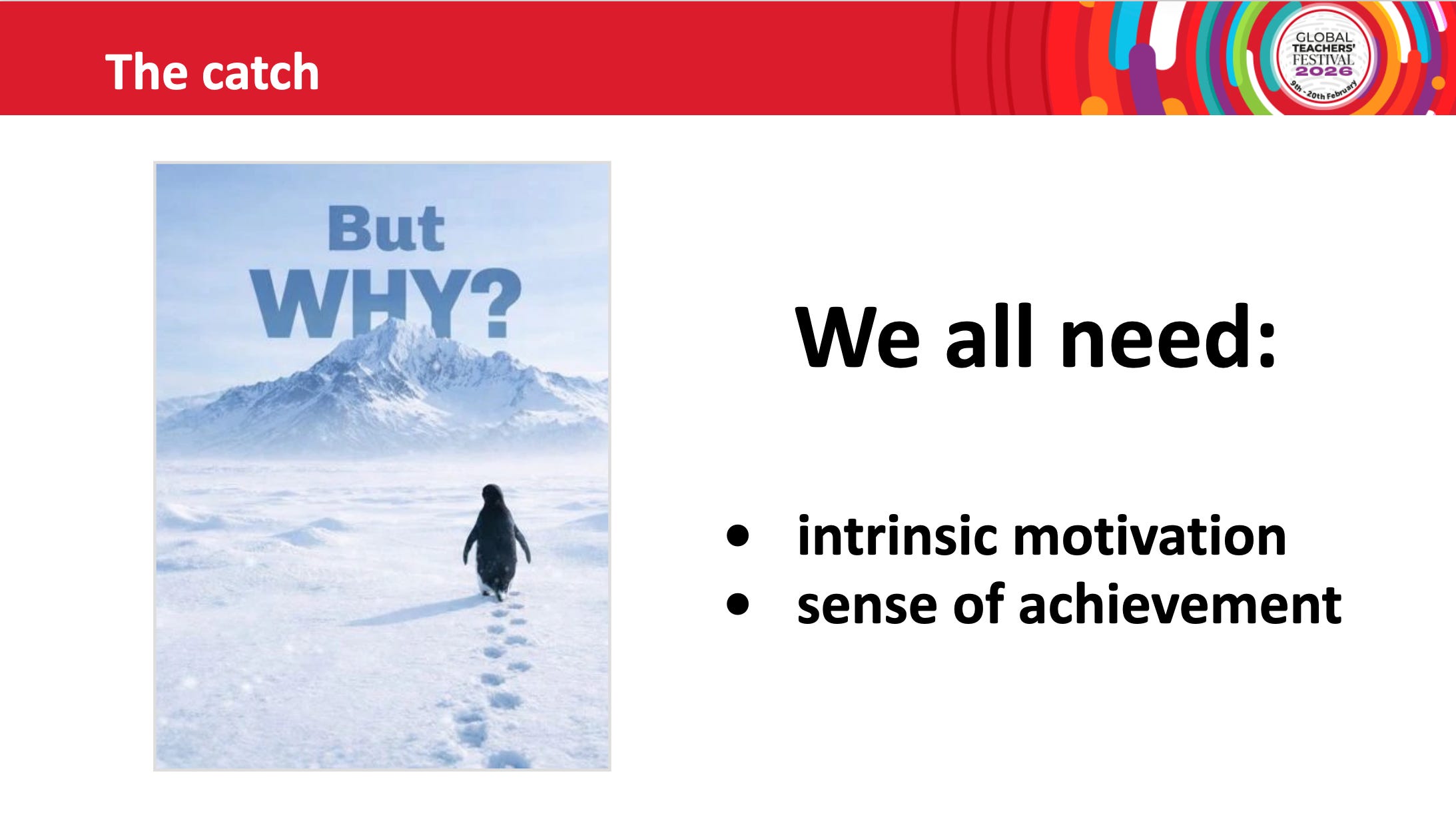
Because most activities in the lesson tend to lack intrinsically motivating content and design and there’s no real sense of achievement. Current generations now more than ever want to know why they’re doing what they’re doing. What’s the purpose of doing the tasks?
Possible solution: more authentic learning environments
One way I think we could solve this problem is if we create more authentic activities and contexts that would hopefully engage our students more. This obviously works more if we teach in an in-person context where we (perhaps) have the chance to make our students pay attention.
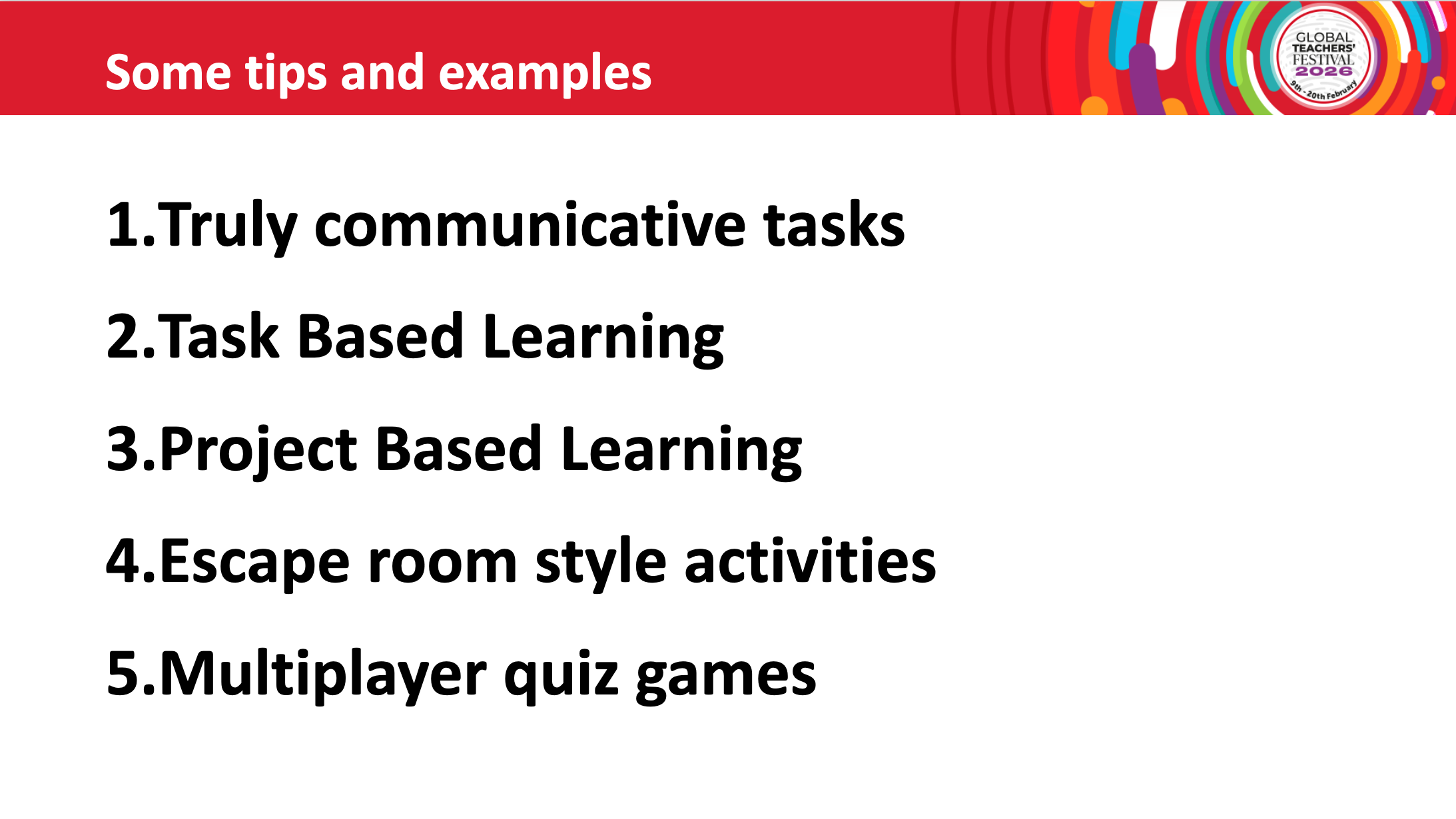
As long as there seems to be an authentic reason why they should be engaging with our lessons and activities, I believe we could make them listen to us and work with us.
Let me know what you think about this! Have you tried any of these techniques? Did they work?
Some additional sources
Truly communicative tasks >> Hadfield, J.: Intermediate Communication Games ; Anderson, J.: Role Plays for Today
Task Based Learning >> Anderson, N.&McCutcheon, N.: Activities for Task-Based Learning
Project Based Learning >> Anderson, J.: A Framework for PBL in ELT ; Ross, C.: Project Power!
Escape room style activities >> Vosieva, D.&Decker, K.: How to Use Escape Room Activities ; Minami, F.W.: Escaping the Classroom
Multiplayer quiz games >> Wayground (Quizizz) Mastery Peak ; Nearpod Time to Climb
Come to IATEFL Brighton, where we’ll explore this in the form of a workshop!

To chatbot: "I want a direct agent. Thank you." (AI has wasted enough of my time—almost as much as telephone support directories.)